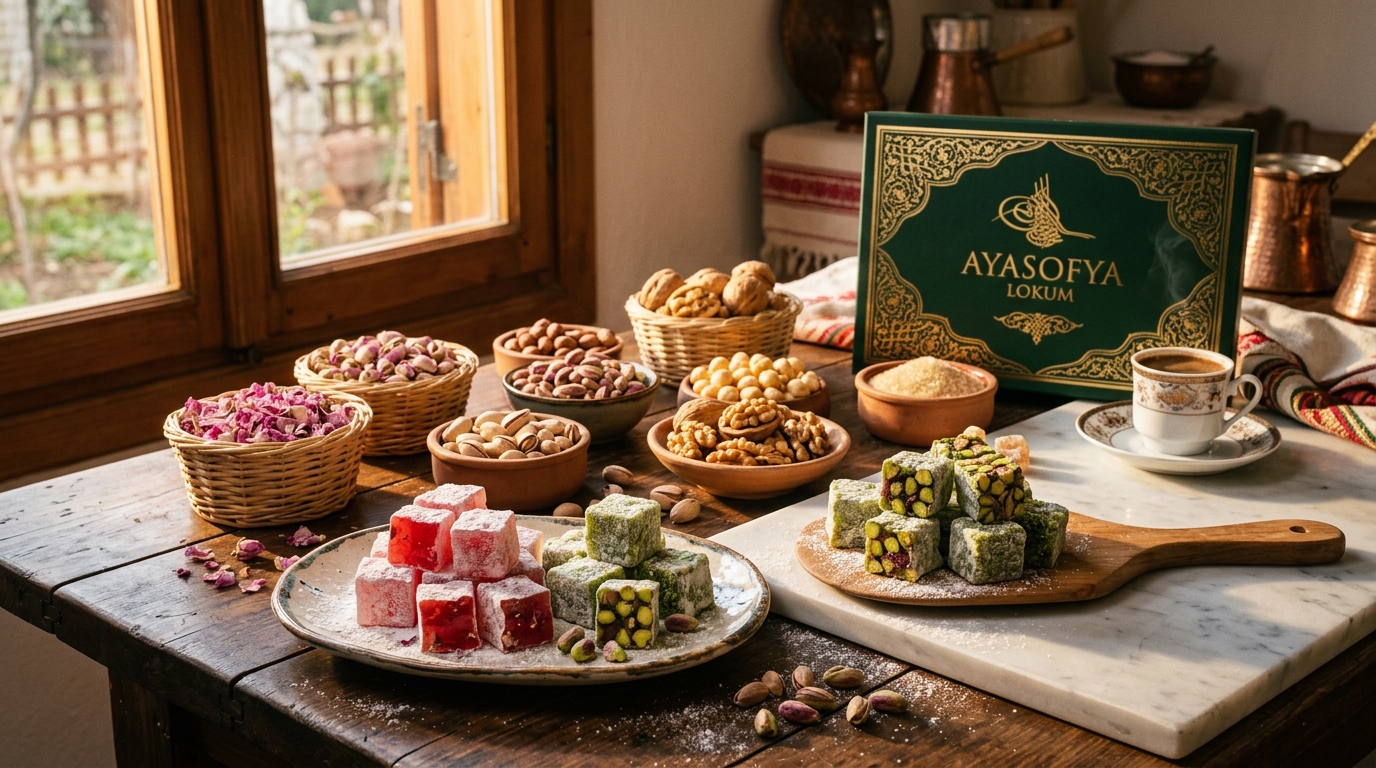
1. October 16 World Food Day: The Fruits of the Soil & Farm-to-Cauldron Heritage
Celebrated annually on October 16 by the Food and Agriculture Organization of the United Nations (FAO), World Food Day highlights agricultural biodiversity, sustainable family farming, and the vital responsibility to preserve food. While the contemporary culinary world champions the 'farm-to-table' movement as a modern innovation, Ottoman confectionery artisans practiced this exact ecological ethos centuries ago.
Palace confectioners never sourced raw ingredients arbitrarily. The microclimate, geographical origin, and harvest season of every crop were cataloged with surgical care. At Ayasofya Lokum's modern 1,000 m² Istanbul facility, producing 5 tons daily with artisanal mastery, our craft is rooted directly in this fertile soil. Instead of relying on synthetic aromas and industrial high-fructose corn syrups, we collaborate directly with Anatolian farmers, championing heirloom agricultural crops and sustainable harvesting practices (explore our transparent distribution network in our direct manufacturer B2B wholesale guide).
2. The Anatolian Geographical Indication Map: 4 Harvest Regions in a Single Box
Opening a box of handcrafted Ayasofya Turkish delight is an invitation to traverse thousands of kilometers across Anatolia's most fertile agricultural microclimates:
- Isparta's Rosa Damascena (Mediterranean Basin): Hand-harvested at daybreak in May before the morning sun evaporates precious essential oils, these petals undergo gentle copper alembic distillation. The resulting pure, food-grade rosewater bestows our delight with an unmistakable royal bouquet, free from synthetic perfuming agents.
- Gaziantep's Early-Harvest 'Boz' Pistachio (Southeastern Anatolia): Gathered in the Barak plains prior to full maturation, these emerald-green kernels possess the world's most concentrated aromatic oil profile. Lightly roasted just before batching, they provide a signature crunch and deep nuttiness.
- Giresun's Plump Hazelnut (Black Sea Coast): Nurtured on steep coastal hillsides by damp maritime breezes, Giresun hazelnuts are globally revered for their thin shell and high oleic fat content, yielding an incomparably rich, buttery flavor when embraced by velvety starch gel.
- Aegean Butterfly Walnuts & Central Anatolian Sugar Beet: Sun-drenched walnut halves from Aegean groves and 100% crystal beet sugar harvested from Central Anatolian plains (learn more in our Turkish delight raw ingredients breakdown).
3. The Zero-Waste Philosophy in Traditional Copper Cauldron Cooking
A cornerstone mandate of World Food Day is halting systemic food loss and waste. Industrial confectioners discard tons of failed batches due to volatile chemical formulations and flash cooking errors. Conversely, artisanal lokum crafting is inherently founded on a zero-waste circular ethos.
Slow-simmering for 2.5 hours in hand-hammered copper cauldrons ensures uniform thermal conduction, enabling starch granules to fully gelatinize without scorching or adhering to the vessel walls (explore the science in our why copper cauldrons are essential for confectionery craft analysis). Cooling gently on natural wooden troughs, the delight batch generates virtually 0% material loss during precision slicing. By excluding synthetic glucose syrups and artificial preservatives, every raw gram harvested from nature is honored and conserved.
4. Household Preservation Protocol: 4 Rules to Prevent Drying & Sugar Bloom
A substantial portion of consumer confectionery waste occurs in households due to improper storage habits. The single most detrimental mistake consumers make is placing artisan Turkish delight in the refrigerator, turning tender cubes into hard, crystalline blocks. To ensure your delight remains fresh and prevents waste, observe these 4 essential rules:
- Avoid the Refrigerator Trap (Room Temperature Rule): Never refrigerate Turkish delight! Low temperatures (4°C) trigger starch retrogradation and rapid sugar recrystallization (bloom), drying out the gel and stripping away aromatic vitality. The ideal storage temperature is 18°C to 22°C (64°F - 72°F) (see our dedicated how to store Turkish delight & refrigerator myth guide).
- Airtight & Light Barrier: Shield the confectionery from direct sunlight and ambient humidity. Store it within its original greaseproof parchment and tightly closed luxury gift box inside a cool, dark kitchen pantry.
- Slice Strictly as Consumed: Do not pre-cut whole confectionery rolls or slabs in advance. Sliced cross-sections dry rapidly upon atmospheric exposure. Carve only the exact portions for immediate serving, keeping the remaining loaf dusted with starch.
- Repurpose Dried Confectionery: If delight cubes become slightly firm after several months, do not discard them! Dissolve a cube of rose delight directly into boiling Turkish coffee in lieu of refined sugar, or bake them inside artisanal cookies for an authentic zero-waste kitchen experience.
5. Sustainability & Craftsmanship Matrix: Artisanal Lokum vs. Mass-Market Candy
A comparative analysis highlighting the ecological and agricultural sustainability differences between artisan confectionery and industrial mass production:
| Sustainability Criterion | Ayasofya Artisanal Palace Delight | Industrial Mass-Market Candy |
|---|---|---|
| Ingredient Provenance | Isparta rose, Antep pistachio, Giresun hazelnut (Geographical Origin) | Synthetic petrochemical flavorings, imported artificial extracts |
| Sweetener & Agronomic Footprint | 100% Crystal Beet Sugar (Non-GMO, domestic crop) | High-Fructose Corn Syrup (Intensive monoculture & GMO risk) |
| Local Farming Support | Direct fair purchasing supporting rural Anatolian farmers | Intermediated global commodities trading |
| Shelf Stability & Food Waste | Naturally stable for 6 months via starch-sugar gel (0% chemicals) | Synthetic preservatives (E-numbers), chemical decay after opening |
| Production Waste Management | 0% batch loss in copper cauldrons, zero chemical effluent | High water pollution from chemical vat cleaning, substantial scrap |
Frequently Asked Questions
What is the connection between World Food Day and Turkish delight?
World Food Day champions agricultural biodiversity, local farmers, and food waste reduction. Authentic Turkish delight represents a living agricultural tradition that honors Turkey's finest regional harvests—Isparta roses, Antep pistachios, Giresun hazelnuts—without artificial additives, fostering sustainable rural livelihoods.
Why must authentic Turkish delight never be stored in the refrigerator?
Refrigeration at 4°C induces starch retrogradation and rapid sugar recrystallization, causing the delicate gel matrix to dry, harden, and lose its supple chewiness. Authentic lokum must be kept at 18-22°C in a dry, dark pantry.
How can slightly dried Turkish delight be repurposed without food waste?
Never discard hardened delight! You can melt a cube of rose or mastic delight into brewing Turkish coffee for delicate sweetness, or chop it into cookie dough and muffin batter for decadent caramelized fruit pockets.
How does the geographical origin of nuts affect confectionery sustainability?
Sourcing early-harvest pistachios from Gaziantep and hazelnuts from Giresun ensures high natural oil content and superior flavor, eliminating the need for synthetic flavor enhancers and directly reinvesting capital into Anatolian family orchards.
How long does preservative-free artisanal Turkish delight stay fresh?
When stored in an airtight container at room temperature away from light and humidity, 100% natural Turkish delight maintains its fresh elasticity and delicate aroma for up to 6 months.
Experience Royal Craftsmanship with Ayasofya Lokum
Indulge in artisanal confectionery crafted with 100% pure beet sugar, premium roasted nuts, and heritage Ottoman recipes. Produced in our 1,000 m² modern Istanbul facility with 0% glucose syrup and 0% animal gelatin.