1. Salivary Kinetics & Oral Biochemistry: Amylase Breakdown and Acid Buffering
Modern cariology research proves that the primary catalyst for enamel demineralization is not merely the presence of sucrose, but rather the 'oral clearance time'—how long a carbohydrate residue clings to tooth surfaces. Cariogenic oral bacteria (predominantly Streptococcus mutans) ferment trapped sugars into lactic acid. When intraoral pH drops below the critical threshold of 5.5, hydroxyapatite crystals in the enamel begin losing vital calcium and phosphate ions.
The biological defense mechanism against this acid attack is human saliva. Secreted by salivary glands, alpha-amylase enzyme and bicarbonate buffering systems are designed to rapidly break down natural starches. Authentic Turkish delight is handcrafted from only three pure elements: 100% crystal beet sugar, natural starch, and pure spring water (explore our Turkish delight raw materials guide). Salivary amylase instantly cleaves the starch bonds within seconds of chewing; the fully water-soluble beet sugar is swept away with a single swallow and a sip of water, preventing the formation of persistent cariogenic biofilms on enamel surfaces.
2. The Industrial Confectionery Trap: Gummies, Toffees & Pediatric Concerns
Pediatric dentists issue far sterner warnings against sticky industrial confections than against traditional chocolate or artisanal sweets. The clinical danger lies in synthetic formulation:
- Animal Gelatin & Synthetic Gums: Gelatin used in mass-market gummy candies does not dissolve in saliva. Upon hydration, it mechanically locks into dental fissures, creating an impenetrable pocket where anaerobic bacteria thrive.
- High-Fructose Corn Syrup (HFCS): The viscous binding agent in commercial toffees and caramels exhibits extreme adhesive tenacity. Once pressed into interdental spaces, it can maintain an intraoral pH below 5.5 for 4 to 6 continuous hours.
- The Copper Cauldron Distinction: Authentic Turkish delight contains 0% gelatin and 0% glucose syrup. In our 2.5-hour slow cooking process in traditional copper cauldrons (read our analysis on why copper cauldrons are essential for confectionery craft), starch granules fully gelatinize. With zero raw starch remaining, the delight becomes resiliently elastic yet non-tacky, gliding over tooth enamel like silk rather than clinging to it.
3. Fillings, Crowns & Braces: Can Turkish Delight Pull Restorations?
Patients with composite resin fillings, amalgam restorations, porcelain veneers, zirconia crowns, or orthodontic brackets frequently experience anxiety when chewing confectionery. In clinical dentistry, the risk mechanism is termed tensile adhesive stress.
When a patient bites into sticky toffee or chewy caramel, the confection acts like a micro-vacuum against the tooth-restoration margin. As the jaws separate, intense upward tensile force pulls on the filling, leading to marginal leakage, micro-fractures, or total debonding. In orthodontic patients, sticky caramels are the leading cause of sheared composite cement and detached brackets.
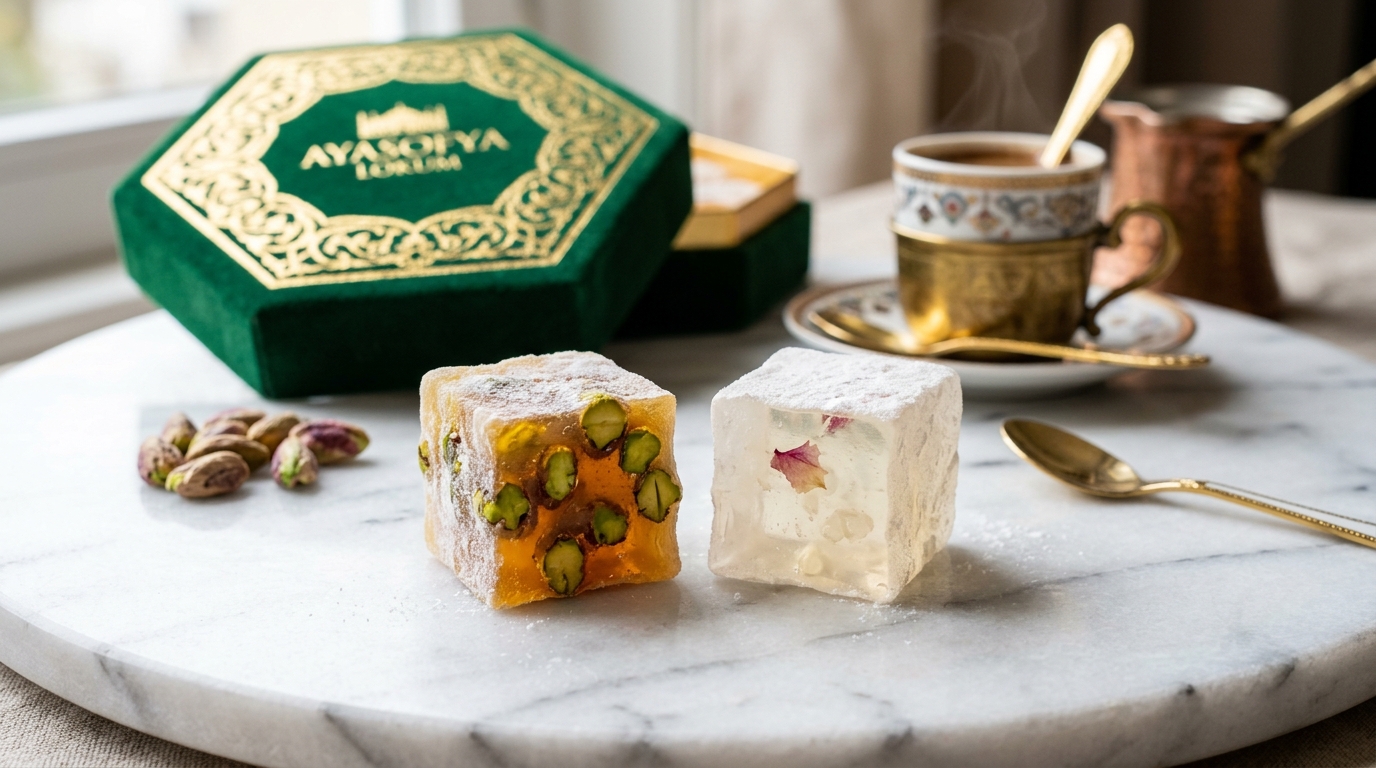
By contrast, when chewing an artisanal Ayasofya Turkish delight:
- Zero Tensile Pull: The inner structure of authentic lokum is elastic to compressive biting force but has zero surface tackiness. It does not grab or pull restorations; the gel matrix shears cleanly against itself rather than adhering to enamel.
- Protecting Margins & Veneers: The starch-sugar surface lubricates instantly upon salivary contact, posing zero abrasive or debonding threat to delicate porcelain or glass ionomer cements.
- Orthodontic Recommendation: For individuals wearing fixed appliances (braces), soft varieties such as plain, rosewater, or mastic gum lokum are 100% safe. Hard whole-nut varieties (e.g., roasted pistachio) should simply be savored gently on posterior molars rather than bitten with anterior brackets.
4. Dental Health Comparison Matrix: Authentic Lokum vs. Commercial Sweets
A dental-grade comparative assessment of various sweet categories across oral clearance, adhesiveness, and restoration safety:
| Evaluation Criterion | Artisanal Ayasofya Lokum | Industrial Caramel / Toffee | Commercial Gummy Candy | Hard Candy / Lollipops |
|---|---|---|---|---|
| Oral Clearance Time | 30 - 60 Seconds (Flushes clean with water) | 3 - 5 Hours (Trapped in fissures) | 2 - 4 Hours (Trapped interdentally) | 15 - 25 Minutes (Continuous bath) |
| Adhesive / Tensile Tack Index | Zero (0 / 5) — Non-sticky | Extreme (5 / 5) — Dislodges fillings | High (4 / 5) — Pulls brackets | Low (1 / 5) — Fracture hazard |
| Salivary Amylase Breakdown | 100% Rapid Enzymatic Breakdown | Insoluble (Synthetic polymers) | Resistant (Insoluble animal gelatin) | Slow dissolution (Prolonged acid) |
| Ingredient Formulation | 100% Crystal Beet Sugar & Starch | Corn Syrup, Palm Oil & Emulsifiers | Glucose Syrup, Gelatin & Food Dyes | Glucose Syrup & Artificial Flavoring |
| Filling & Braces Safety Rating | Clinically Safe (Gentle shearing) | High Risk (Tensile debonding) | Moderate-High Risk | High Enamel Crazing / Cusp Fracture |
5. The 4-Step Family Dental Protocol for Enjoying Sweets Responsibly
Completely banning confections is rarely realistic or sustainable for children and families. The key to lifetime oral health lies in choosing sweets with optimal oral clearance and pairing them with smart consumption habits. At Ayasofya Lokum's modern 1,000 m² facility in Çatalca/Istanbul, where we produce 5 tons daily adhering strictly to zero glucose and zero animal gelatin standards, we advocate this 4-step dental protocol:
- Substitute Sticky Gummies with Artisanal Delight: Replace ultra-sticky, dye-laden mass-market gummies with natural Turkish delight made from pure beet sugar and real nuts (review our comprehensive healthy snacks for kids guide).
- The Immediate Water Rinse: Drinking a glass of room-temperature water right after enjoying lokum flushes loose sugar molecules directly into the stomach, returning salivary pH back to a safe neutral 7.0 within seconds.
- The 20-Minute Brushing Rule: Contrary to popular myth, brushing immediately after sweet consumption can abrade enamel temporarily softened by acidic salivary shifts. Instead, rinse with water, wait 20 to 30 minutes for natural salivary remineralization, and then brush gently with fluoride toothpaste.
- Verify Authentic Quality: Industrial counterfeit lokum cooked in steam kettles within 40 minutes can contain raw starch that sticks to teeth. Learn how to distinguish genuine artisan confectionery with our how to identify genuine Turkish delight guide.
Frequently Asked Questions
Does Turkish delight cause dental cavities?
No single sweet directly causes cavities on contact; caries develop when adhesive sugars remain trapped on enamel for extended hours. Authentic Turkish delight is formulated with pure beet sugar and fully gelatinized starch that rapidly dissolves in saliva and water, leaving no lingering sticky residue and dramatically lowering decay risk compared to commercial gummies.
Can people with dental fillings, crowns, or veneers safely eat Turkish delight?
Yes, absolutely. Authentic Turkish delight possesses non-tacky elasticity and exerts zero tensile adhesive pull when chewed. It shears cleanly under occlusion rather than clinging to composite or porcelain margins, ensuring restorative work remains intact.
Is Turkish delight safe for children with orthodontic braces?
Yes. While toffees and sticky caramels frequently pull brackets and distort archwires, soft authentic Turkish delight (such as plain, rose, or mastic) does not adhere to brackets. For varieties with whole roasted pistachios or hazelnuts, children should simply chew gently on rear molars.
Should I brush my teeth immediately after eating Turkish delight?
No. Brushing immediately can abrade acid-softened enamel. The clinical recommendation is to drink or swish a glass of water right away to clear free sugars, wait 20 to 30 minutes for saliva to remineralize the enamel, and then brush gently.
Why are commercial gummies and toffees more harmful to teeth than authentic lokum?
Commercial gummies contain animal gelatin and high-fructose corn syrup which do not dissolve readily in saliva, forming a tenacious coating in dental fissures that feeds bacteria for 4 to 6 hours. Authentic lokum contains zero gelatin or corn syrup and dissolves cleanly in minutes.
Experience Royal Craftsmanship with Ayasofya Lokum
Indulge in artisanal confectionery crafted with 100% pure beet sugar, premium roasted nuts, and heritage Ottoman recipes. Produced in our 1,000 m² modern Istanbul facility with 0% glucose syrup and 0% animal gelatin.