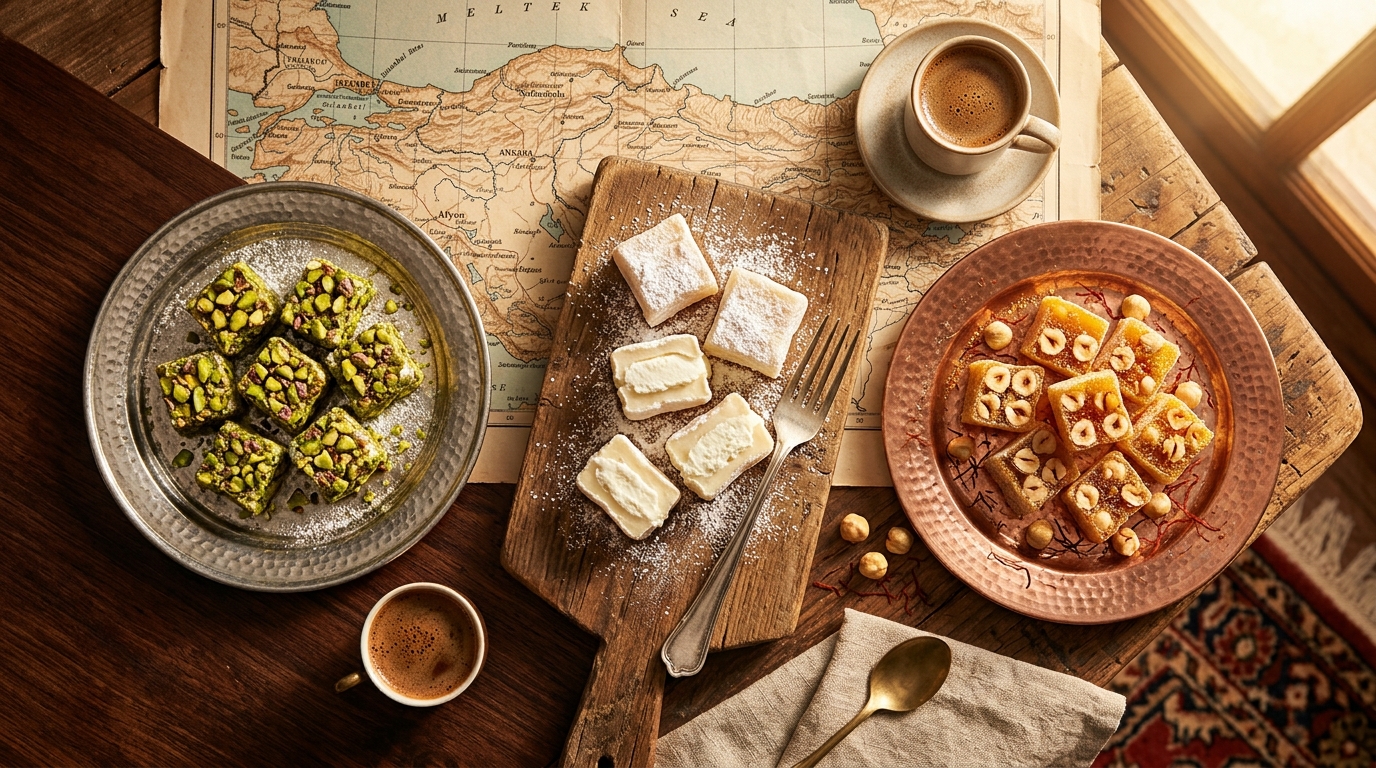
When you bite into a piece of Turkish delight, you are tasting centuries of Anatolian history. But a common question arises among culinary enthusiasts and travelers alike: Where exactly does Turkish delight come from? Which city can claim true ownership of this iconic confection?
The answer is both simple and wonderfully complex. While the refined, modern version of lokum was born in the bustling imperial capital of Istanbul, the tradition quickly spread, evolving into distinct regional specialties. Today, cities like Afyon and Safranbolu are just as famous for their unique interpretations of the sweet. Let us embark on a journey across Turkey to discover the regional roots of lokum.
1. The Birthplace: Istanbul's Palace Kitchens
The story of modern Turkish delight begins in the heart of the Ottoman Empire: Istanbul. Before the late 18th century, traditional Anatolian sweets like pekmez (grape molasses) and honey-based candies were common. But it was in the royal kitchens of the Topkapı Palace that lokum, as we know it today, was perfected.
With the introduction of refined sugar and cornstarch to the empire, Istanbul’s confectioners began experimenting. They created a soft, translucent gel that was a significant departure from the harder, flour-based sweets of the past. Known as rahat-ul hulküm (comfort of the throat), this new confection became a staple of palace life before trickling down to the public bazaars of Eminönü and the Grand Bazaar.
The Istanbul Style: Istanbul-style lokum is characterized by its elegance and variety. It is typically cut into neat, bite-sized cubes and heavily dusted with powdered sugar to prevent sticking. Traditional flavors include rose water, lemon, mastic, and plain (sade), often studded with premium pistachios or walnuts. It remains the global gold standard for Turkish delight.
2. Afyon Lokum: The Magic of Buffalo Cream
If Istanbul is the birthplace of lokum, the western Anatolian city of Afyonkarahisar (Afyon) is its most indulgent reimagining. Afyon is historically famous for two things: poppies and dairy, specifically water buffalo clotted cream known as kaymak.
Afyon confectioners had the brilliant idea to combine their local kaymak with traditional Turkish delight. The result is Afyon Kaymaklı Lokumu (Afyon clotted cream lokum). Instead of cubes, this lokum is typically made in a flat sheet, spread with a thick layer of rich, fresh clotted cream, and then rolled into a log and sliced.
The Afyon Style: Because it contains fresh dairy, Afyon lokum is highly perishable and must be consumed within a few days. It is incredibly soft, creamy, and rich, dusted with coconut flakes rather than powdered sugar. It is less a candy and more a decadent, fresh dessert, representing a beautiful marriage of local agriculture and traditional confectionery.
3. Safranbolu Lokum: A UNESCO Town's Sweet Legacy
Further north, near the Black Sea region, lies the picturesque, UNESCO World Heritage-listed town of Safranbolu. Named after the saffron crocus that grows abundantly in the area, this town has developed a lokum tradition that perfectly reflects its local terroir.
Safranbolu lokum is renowned for being lighter and less sweet than its counterparts. Confectioners here emphasize the use of mineral-rich natural spring water and, naturally, local saffron, which imparts a beautiful golden hue and a subtle, earthy floral flavor to the sweet.
The Safranbolu Style: This lokum is often slightly firmer in texture. It is cooked in traditional copper cauldrons over wood fires, which adds a distinct caramelization. Besides saffron, it frequently features local hazelnuts and pistachios. Safranbolu lokum is a testament to how hyper-local ingredients can transform a national classic into a unique regional treasure.
4. Istanbul vs. Afyon vs. Safranbolu: Comparison Table
| Feature | Istanbul Lokum | Afyon Lokum | Safranbolu Lokum |
|---|---|---|---|
| Defining Trait | Classic, versatile, palace heritage | Rolled with water buffalo kaymak | Local saffron, spring water |
| Texture | Soft, elastic, chewy gel | Creamy, melt-in-the-mouth | Firm, light, mineral finish |
| Coating | Powdered sugar | Grated coconut | Light powdered sugar |
| Shelf Life | Months (ambient storage) | 2-3 days (refrigerated) | Months (ambient storage) |
5. Other Regional Lokum Traditions
While Istanbul, Afyon, and Safranbolu are the "big three" of Turkish delight, other regions of Turkey have their own honorable mentions:
- Isparta: Known as the city of roses, Isparta produces arguably the finest rose water in the world, which naturally translates to exceptional rose-flavored lokum.
- Gaziantep: While famous for baklava, Antep's lokum is notable for its incredibly high density of world-class "boz" pistachios.
- Bursa: Famous for fruit agriculture, Bursa often incorporates unique local fruit purees into its lokum recipes.
6. Frequently Asked Questions
Which city does Turkish delight belong to?
Turkish delight (lokum) was formally established and standardized in Istanbul's Ottoman palace kitchens during the late 18th century. However, today it is a shared Anatolian heritage with renowned regional varieties in cities like Afyon and Safranbolu.
What is Afyon lokum famous for?
Afyon lokum is famous for its use of local buffalo clotted cream (kaymak). The rich cream is folded into the lokum, creating a soft, dairy-rich delicacy that must be consumed fresh, usually within a few days.
What makes Safranbolu lokum different?
Safranbolu lokum is distinguished by its use of local saffron, natural spring water, and a lighter, less sweet profile. It is often firmer and cooked in traditional copper cauldrons with local nuts like hazelnuts or pistachios.
Is Turkish delight from Istanbul or Afyon?
The original modern recipe of Turkish delight was developed in Istanbul. However, Afyon has become equally famous for its distinct clotted cream variety. Both cities are central to the history and perfection of lokum.
7. Experience Istanbul's Craft with Ayasofya Lokum
At Ayasofya Lokum, we proudly carry forward the original Istanbul tradition. Our recipes are rooted in the classic palace style, emphasizing the perfect balance of starch and sugar to create that quintessential, luxurious chew. From classic rose and mastic to premium double-roasted pistachios, we craft our lokum with the same dedication to quality that the Ottoman confectioners prized centuries ago.
Taste Authentic Istanbul Palace Delights
Discover our imperial collection made with authentic recipes, double roasted Turkish pistachios, and pure Isparta rose water.
Explore the Collection