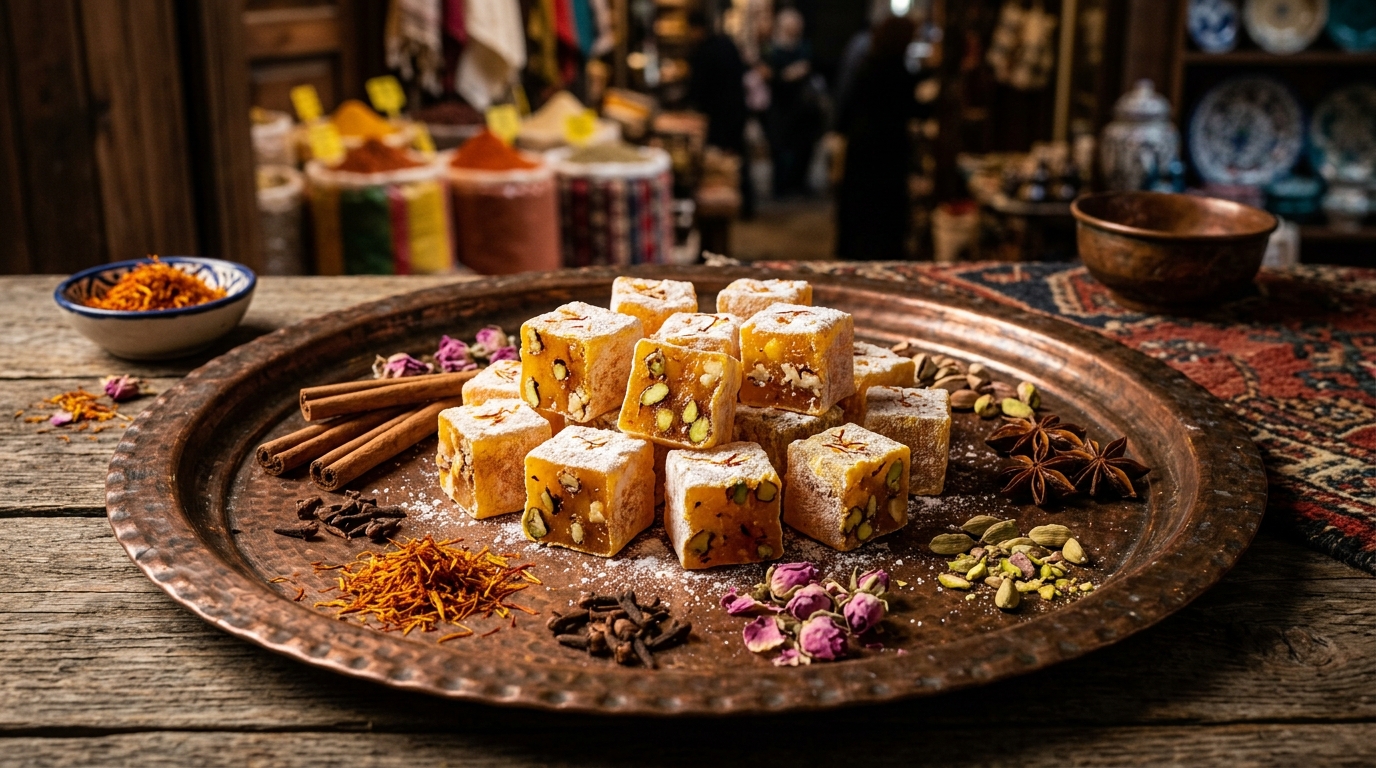
The Spice Road Echoes Around Hagia Sophia and the Spice Bazaar
For centuries, the Historic Peninsula of Istanbul has stood as the crossroads of civilization where Eastern trade routes intertwined with imperial Ottoman banquets. Extending from the majestic domes of Hagia Sophia down to the vibrant shores of the Golden Horn and the Egyptian Spice Bazaar (Mısır Çarşısı), these cobblestone streets have always breathed the intoxicating perfume of freshly roasted coffee, toasted nuts, and overflowing spice sacks.
Within the royal sweet kitchens (Helvahane) of Topkapı Palace, the master confectioners were not content with mere sugar and water. They seized exotic treasures carried along maritime trade lanes—cardamom from India, cloves from Zanzibar, and mastic tears from Aegean groves—transforming classic lokum into an opulent multisensory art form.
Palace Botanicals: The Noble Harmony of Saffron and Mastic
In palace gastronomy, adding spices was never arbitrary; each botanical element served a refined aesthetic and digestive purpose. The signature spices honoring traditional Ayasofya delight include:
- Saffron (Safranbolu & Persian): Revered as the king of spices, saffron threads impart an alluring golden-amber color and an unmistakable, honeyed floral undertone.
- Authentic Chios Mastic Gum: Resin tears hand-harvested on the island of Chios lend a velvety chewiness and a crisp pine-like fragrance that cleanses the palate.
- Ceylon Cinnamon & Cloves: A timeless Ottoman coupling that tempers the syrup's sweetness, creating a comforting, aromatic warmth.
- Ginger & Green Cardamom: Highly regarded by imperial physicians to invigorate the spirit, enhance digestion, and deliver delicate citrusy undertones.
From Royal Apothecaries to Confectionery: The Healer's Touch
In classical Ottoman medicine, botanical spices were cherished as vital remedies to harmonize the mind and body. Famous royal pastes (Macun-ı Padişahi), concocted with over forty botanical extracts, eventually influenced confectionery masters to incorporate therapeutic spices into everyday sweets.
Slowly simmering in heavy copper cauldrons over several hours, the delicate lokum gel gently encapsulates the essential volatile oils without scorching them. When you bite into an authentic piece, the delicate exterior powder melts away, unrolling waves of subtle spice warmth. At Ayasofya Lokum, we faithfully preserve this artisanal balance using 100% natural beet sugar, pure spring water, and noble spices—free from synthetic aromas or chemical coloring.
How to Identify and Preserve Spiced Artisan Lokum
Distinguishing authentic spiced Turkish delight from mass-produced commercial confectionery is effortless once you know the signs:
- Natural Hues: Genuine saffron or spiced lokum exhibits warm, subtle amber and golden tones rather than electric neon shades. Saffron threads should remain visible throughout the slice.
- Layered Bouquet: Opening an artisan box reveals a gentle, evolving bouquet of ground cinnamon and resinous mastic, rather than an aggressive blast of synthetic candy perfume.
- Proper Storage: To safeguard the delicate essential spice oils, store your confections at room temperature (16–20°C / 60–68°F) in an airtight tin away from direct sunlight. Never refrigerate, as humidity ruins the starch dusting and compromises the texture.
Frequently Asked Questions
Are the spices in artisanal Turkish delight real or artificial flavorings?
Authentic Ottoman-style confections exclusively use whole botanical ingredients: genuine saffron threads, hand-ground mastic tears, and pure crushed spices steeped in copper cauldrons, with zero artificial flavors or chemical extracts.
Why is Hagia Sophia closely associated with exotic spices and Turkish delight?
Istanbul's Historic Peninsula was the maritime terminus of the ancient Spice Route. The proximity between Topkapı Palace kitchens, the Spice Bazaar, and Hagia Sophia forged a legendary culinary legacy where exotic spices were immortalized in royal lokum.
What is the best way to store spiced Turkish delight?
Store spiced Turkish delight at room temperature (16-20°C / 60-68°F) in an airtight box away from direct sunlight and humidity. Never refrigerate, as condensation causes the delicate starch coating to soften and alters the volatile spice aromas.
Taste the Century-Old Heritage with Ayasofya Lokum
Discover our handmade Turkish delight collection, crafted with natural ingredients and premium roasted nuts following authentic Ottoman palace recipes.
Explore Our Collection