1. Thermal Conductivity and the Localized Hotspot Trap
In the science of culinary physics, the metallurgical properties of cooking vessels dictate the molecular destiny of the confection. Copper boasts a remarkable thermal conductivity of approximately 400 W/m·K, whereas industrial stainless steel languishes at a meager 16 W/m·K. Copper transmits thermal energy 25 times faster and incomparably more smoothly.
Stainless steel creates severe localized 'hotspots' directly above the burner. The confectionery paste at the bottom scorches before the core reaches cooking temperature. To circumvent this, industrial mass-producers wrap tanks in high-pressure steam jackets and abbreviate simmering to 35-40 minutes. However, rushing this delicate process destroys the authentic soul of lokum. Discover the full production cycle in our 7 stages from cauldron to box guide.
2. Molecular Starch Gelatinization: The 2.5-Hour Simmering Secret
The revered texture of genuine Turkish delight—resilient upon chewing yet melting effortlessly on the tongue—relies on the complete molecular gelatinization of starch. The amylose and amylopectin polymer chains can only entrap beet sugar and water molecules into an elastic network under continuous, uniform simmering between 115°C and 125°C.
When rushed in industrial steel tanks for 40 minutes:
- Raw Starch Residue: The cores of starch granules remain unhydrated, producing an unpleasant floury, pasty coating that stubbornly clings to your teeth.
- Glucose Syrup Addiction: To mask raw starch and simulate gloss, mass producers inject industrial high-fructose corn syrup.
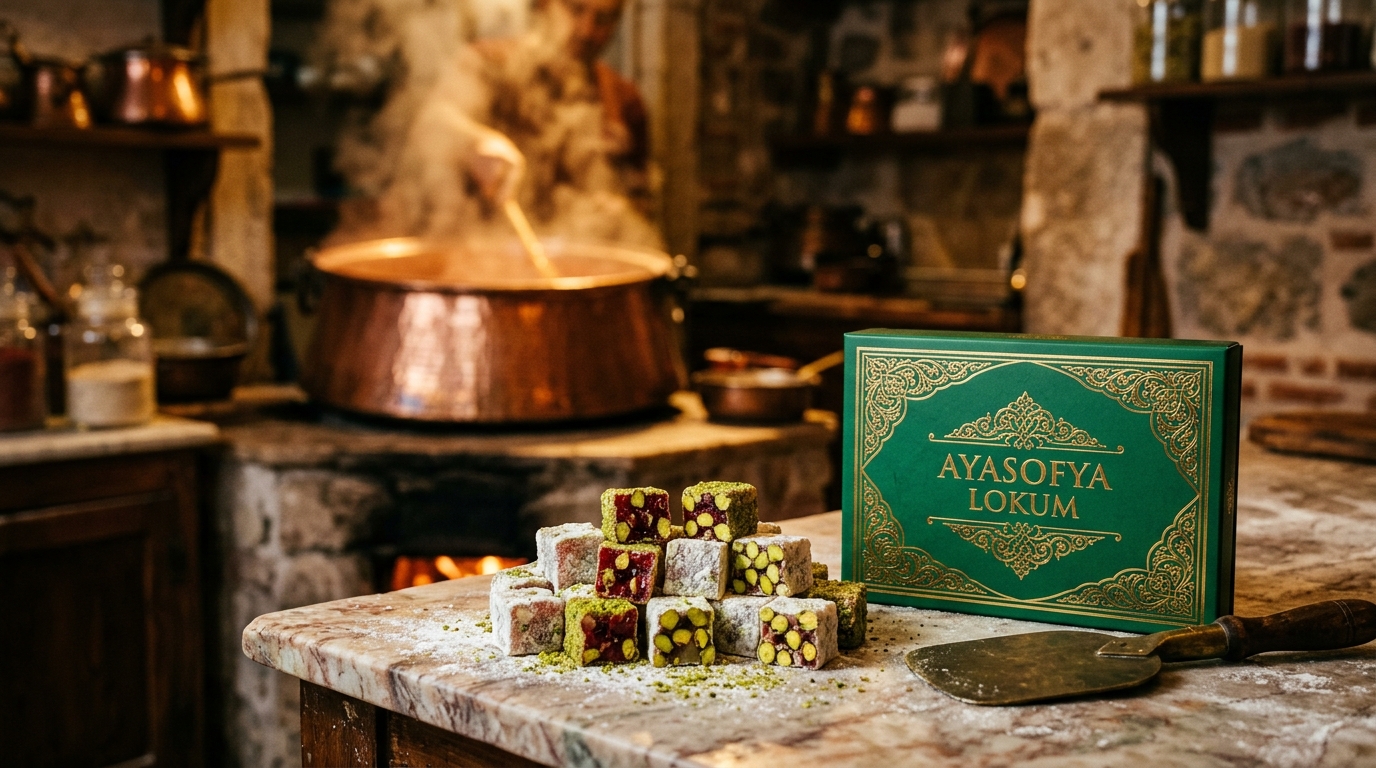
- The Copper Cauldron Wonder: Simmered for 2.5 hours in tinned copper with ceaseless wooden paddle stirring, starch molecules intertwine into a non-crystallizing, silky gel. Pure resilience that springs back when pressed can only be achieved through this artisan patience. Explore ingredients in our Turkish delight ingredients guide.
3. Consumer Quality Shield: Hand-Hammered Copper vs. Industrial Steel Vessels
A technical comparison empowering consumers to distinguish true confectionery mastery from industrial shortcuts:
| Evaluation Criterion | Artisanal Hand-Hammered Copper | Industrial Steam-Jacketed Steel |
|---|---|---|
| Thermal Conduction & Spread | Superior (~400 W/m·K) & 100% uniform | Poor (~16 W/m·K), localized burning risk |
| Simmering Duration | 2.0 to 2.5 Hours (Gentle reduction) | 35 to 45 Minutes (Forced steam pressure) |
| Palate Feel & Elasticity | Silky, elastic spring-back; zero stickiness on teeth | Floury, gummy paste that clogs teeth |
| Ingredient Purity | 100% Natural Crystal Beet Sugar (0% Glucose, 0% Gelatin) | Glucose syrup, artificial stabilizers, and acidity regulators |
| Craftsmanship & Maintenance | Skilled paddle artisans, periodic tinning & patience | Automated push-button, low-cost assembly line |
4. Loyalty to Heritage in Çatalca: 5 Tons Daily Capacity, Zero Compromise
While many confectionery brands have abandoned copper in favor of automated stainless steel tanks to cut labor costs, Ayasofya Lokum maintains uncompromising devotion to historic methods. In our 1,000 m² state-of-the-art facility in Çatalca, Istanbul, we produce up to 5 tons daily while keeping traditional hand-hammered copper cauldrons at the beating heart of our kitchen.
Every single batch is simmered slowly over controlled hearths in food-safe tinned copper, stirred continuously by master confectioners using wooden oars. No corn syrups or artificial fillers ever cross our threshold. This unyielding dedication brings 15th-century imperial palace luxury into the modern world.
5. Consumer Guide: How to Verify Your Lokum Was Cooked in Copper in 3 Seconds
When opening a box of Turkish delight, you can instantly determine whether you are holding genuine confectionery art or an industrial replica:
- 1. The Rebound Finger Test: Press firmly down on a cube with your thumb and release. Copper-simmered lokum springs back into its original shape in a fraction of a second; it never collapses like jelly.
- 2. The Clean Teeth Test: If the sweet sticks to your molars or leaves a pasty film on your tongue, it was rushed in an industrial steel cooker. Authentic lokum melts away cleanly with mouth heat.
- 3. The Transparency Test: Held up to ambient light, copper-simmered lokum reveals amber-like clarity and translucent luster, not a dull, opaque chalky mass. Learn more in our how to identify authentic Turkish delight guide and our luxury lokum standards.
Frequently Asked Questions
Can the tin lining of copper cauldrons melt or contaminate the confection?
No. Pure tin has a melting point of 232°C, whereas lokum boils between 115°C and 125°C. Properly tinned food-grade copper cauldrons are entirely inert, non-reactive, and have served as the safest cookware in confectionery history for centuries.
Why did industrial factories abandon copper cauldrons for steel vessels?
Stainless steel tanks require no manual tinning maintenance and churn out batches in 35 minutes via automated steam. Copper cauldrons demand intense physical craftsmanship, 2.5 hours of steady fuel, and dedicated supervision—costs that mass-market producers cut.
Does Turkish delight sticking to teeth mean it was poorly cooked?
Absolutely yes. Confectionery sticking to teeth is unequivocal proof that starch was cooked too quickly to gelatinize properly, and glucose syrup was added to mask the defect.
Experience Royal Craftsmanship with Ayasofya Lokum
Indulge in artisanal confectionery crafted with 100% pure beet sugar, premium roasted nuts, and heritage Ottoman recipes. Produced in our 1,000 m² modern Istanbul facility with 0% glucose syrup and 0% animal gelatin.