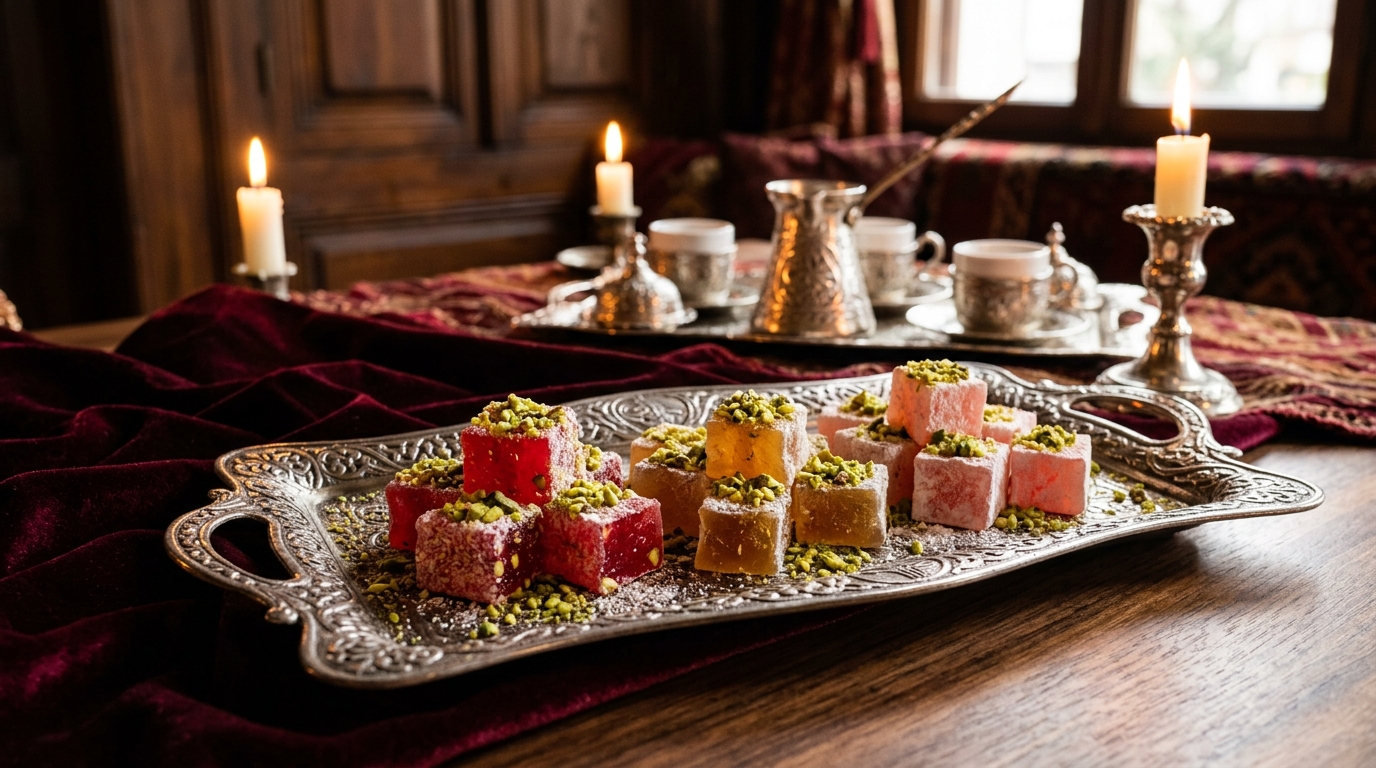
Ottoman delight is living testament to how simple starch and sugar, when combined with centuries-old palace culinary craftsmanship and exceptional ingredients, ascend into the highest realm of gastronomy. But what truly sets authentic Ottoman delight apart from commercial confectionery, or is it merely marketing vocabulary?
History of Ottoman Delight
Emerging in 18th-century Istanbul imperial palace kitchens when court confectioners skillfully married pure cornstarch with boiled beet sugar syrup and fresh botanical extracts, Ottoman delight swiftly journeyed along trade routes to European royal palaces.
Archival tax registers from Istanbul's central markets dating back to 1776 demonstrate that master confectioners paid specific Guild taxes on specialized delight production. This proves that lokum was not solely an imperial luxury, but a venerable craft strictly regulated by artisan guild standards. The Grand Bazaar area remains the beating heart of this tradition to this day.
"Lokum is one of the most enduring culinary gifts the Ottoman Empire shared with civilization. Handing down these recipes through generations of master-apprentice bonds demonstrates that it is not merely a confection, but a living cultural heritage."
The Differences: Ottoman vs. Industrial Lokum
The dividing line between authentic Ottoman delight and contemporary commercial Turkish delight lies in ingredient purity, cooking duration, and manual craftsmanship. While "Turkish delight" denotes an overall dessert category, "Ottoman delight" describes its most refined, additive-free, and labor-intensive artisanal form.
| Criterion | Ottoman Delight (Traditional) | Industrial / Standard Delight |
|---|---|---|
| Sugar Source | 100% Pure Beet Sugar | High-fructose corn syrup blends |
| Cooking Method | Open copper kettle, slow simmer (2-4 hrs) | Pressurized steam cooker (30-45 mins) |
| Aromas & Color | Distilled Isparta rosewater, genuine Chios mastic | Synthetic food colorings & artificial flavorings |
| Mouthfeel & Texture | Silky, non-sticky, melt-in-mouth chew | Rubbery, gummy, or excessively hard |
| Additives | Zero additives or artificial preservatives | Stabilizers and chemical glazes |
Authentic Ingredients
The genuine royal recipe relies strictly upon four primary components: mineral water, unrefined beet sugar, pure cornstarch, and fresh lemon juice. The aroma and character come entirely from authentic nature:
Isparta Rosewater & Chios Island Mastic
Steam-distilled pure Rosa damascena petals from Isparta and natural aromatic resin from the Aegean island of Chios bestow an unmistakable royal elegance.
PDO Antep Pistachios & Datça Almonds
Generously packed with fresh-harvest emerald green pistachios from Gaziantep or double-roasted golden Mediterranean almonds.
Traditional Palace Recipe
For culinary connoisseurs seeking to understand the craft:
- Syrup Preparation: 4 cups of pure beet sugar and 1.5 cups of water are combined in a copper pot. 1 tablespoon of freshly squeezed lemon juice is incorporated and simmered to 115°C.
- Starch Slurry: In a separate bowl, 1 cup of pure cornstarch, 1 teaspoon cream of tartar, and 2 cups of cold water are whisked until completely lump-free.
- Slow Simmer & Reduction: The starch slurry is gently poured into the bubbling syrup. Over low heat, the mixture is stirred continuously with wooden paddles for 45 to 60 minutes until amber translucence is achieved.
- Aromatics: Just before taking off the heat, 2 tablespoons of authentic rosewater or generous heaps of roasted pistachios are gently folded in.
- Curing & Cutting: Poured into starch-dusted wooden trays, the delight rests at room temperature for at least 24 hours before being hand-cut into perfect cubes.
Pro Tips for Serving & Storing
- Never pause stirring during cooking; even a few seconds of stillness causes the bottom to scorch.
- Never store Turkish delight in the refrigerator; humidity and cold cause moisture loss and sugar recrystallization. A cool, dry cupboard is ideal.
Frequently Asked Questions
What is the core difference between Ottoman delight and standard delight?
Ottoman delight is handcrafted following royal recipes with 100% natural beet sugar, slow open-kettle simmering, and zero synthetic preservatives.
Which starch is best for authentic Turkish delight?
Pure cornstarch is the gold standard. Its gelatinization profile gives lokum its signature springy chew without cloudiness.
Discover the Imperial Taste
Instead of hours in the kitchen, invite the authentic Ottoman palace experience to your table through the Ayasofya Lokum signature collection. To understand how authentic recipes are scaled in a modern facility, read our guide on how Turkish delight is made in a factory.
View the Collection